

What Is a Bronze Die?
A die is the metal disc at the front of a pasta extruder. Dough is pushed through its openings, and those openings decide the shape — the curl of a casarecce, the hollow of a bucatini, or the ruffled edge of mafaldine.
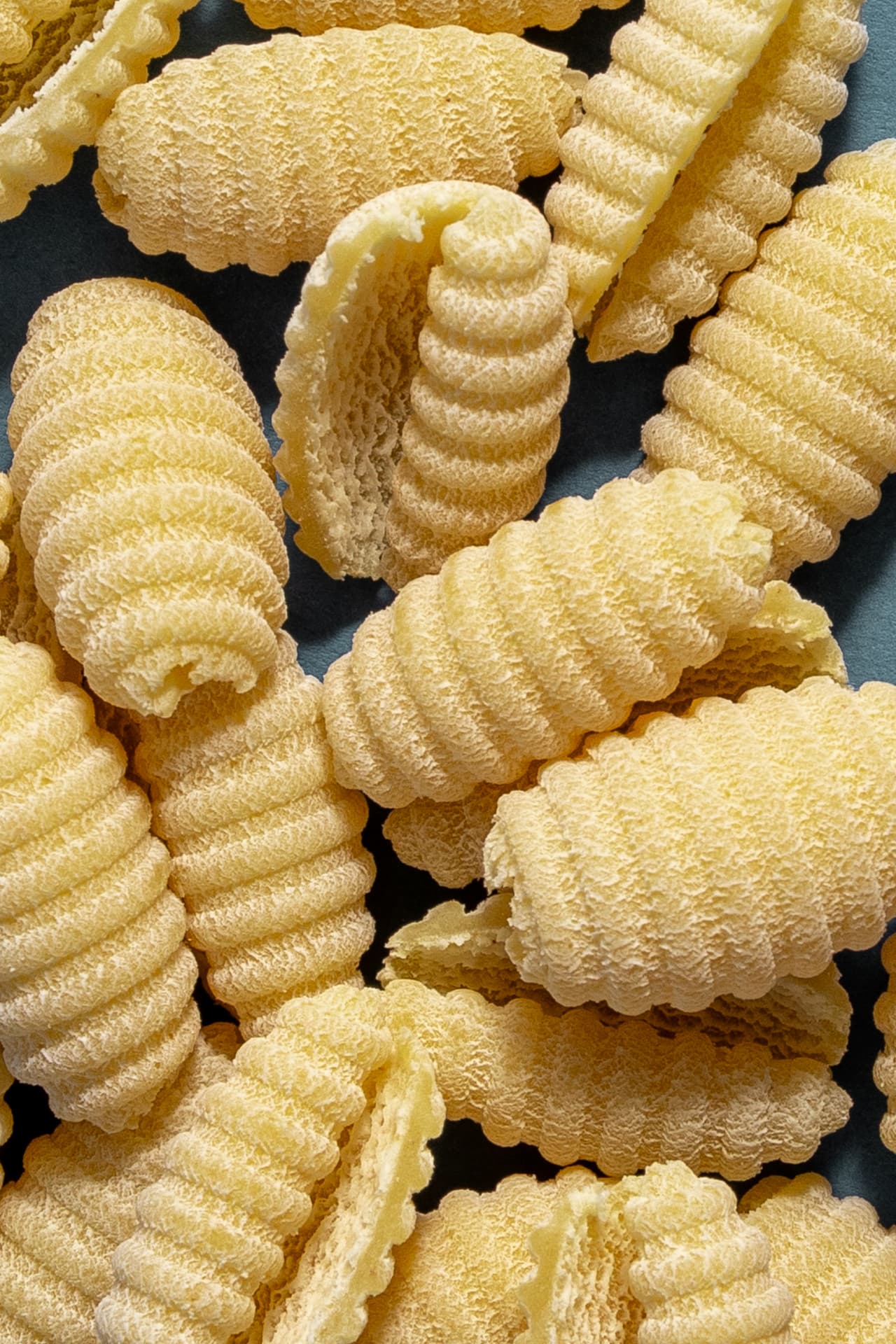
Most mass-market pasta uses dies with Teflon (PTFE) inserts. They run fast and make a smooth, shiny noodle. Bronze dies are the traditional Italian choice: the friction between dough and bronze scuffs the surface, leaving a matte, micro-rough finish you can see and feel.
In Gragnano, Italy, bronze drawing is part of the protected Pasta di Gragnano PGI tradition. We bring that same principle to fresh pasta made in Seattle — machine-made, never handmade, with bronze dies on every shape.
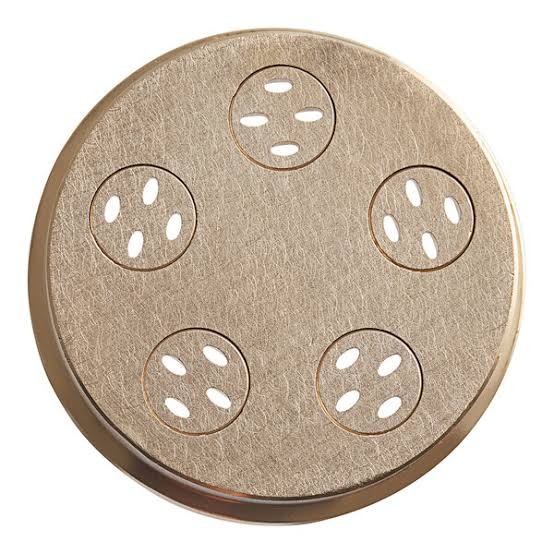
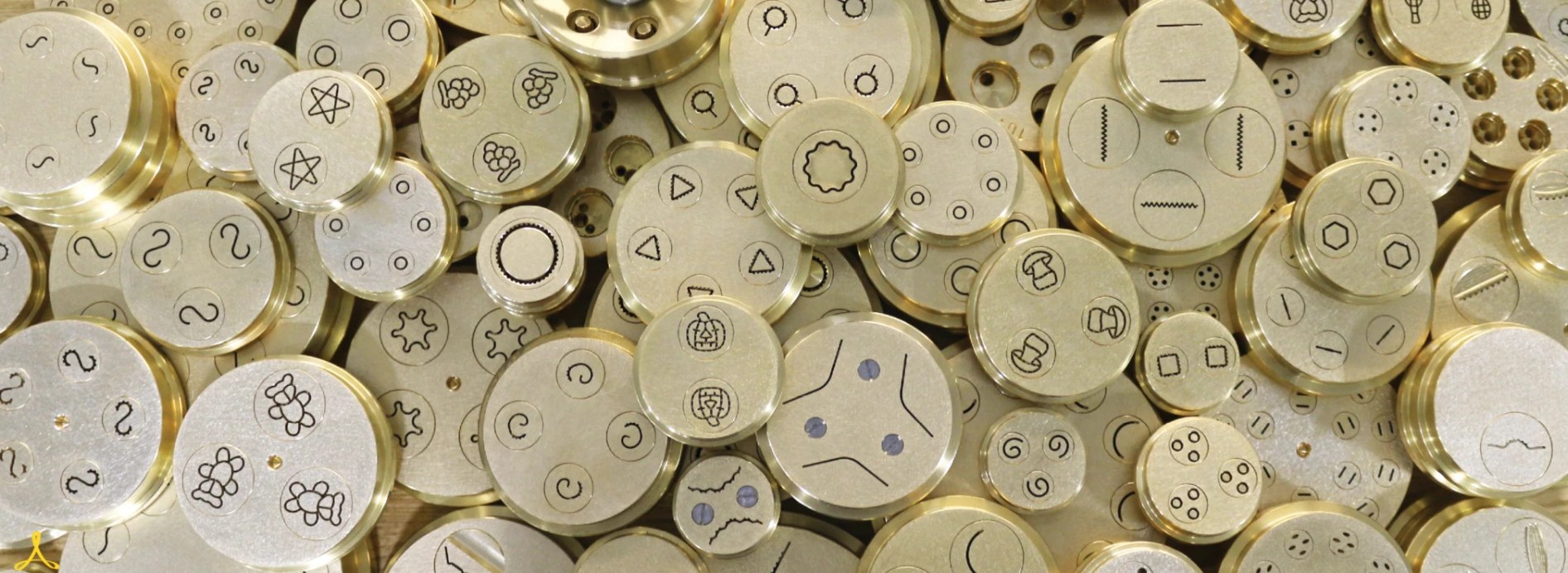
Every shape has its own die. Browse a full bronze die set catalog, or see the Emiliomiti and Arcobaleno machines that run them.
The Process
How Bronze-Die Extrusion Works
Dough
Durum wheat semolina and water (or eggs for egg doughs) are mixed to an exact hydration so the dough extrudes cleanly.
Extrusion
Our pasta machine presses the dough under pressure through a bronze die — a disc machined with the openings that form each shape.
Friction
Bronze is softer and grippier than Teflon-coated inserts. That friction drags against the dough and leaves a rough, porous surface.
Cutting
A blade trims the pasta to length as it leaves the die: short shapes like casarecce or long strands like bucatini.
Packing
Fresh pasta is portioned and packed for restaurants, retail and foodservice — fresh, not dried for months.
Bronze vs. Teflon Dies
| Bronze die | Teflon die | |
|---|---|---|
| Surface | Rough, matte, micro-porous | Smooth, glossy, slick |
| Sauce grip | Sauce clings and emulsifies onto the pasta | Sauce tends to slide off and pool |
| Cooking water | Releases more starch for silkier pan sauces | Releases less starch |
| Bite | Firm, toothsome, holds al dente in service | Softer, more uniform |
| Extrusion speed | Slower, more friction | Faster, high-volume |

What It Means in the Kitchen
For chefs, bronze-cut fresh pasta means sauce that coats instead of pools, starchy cooking water that builds glossy pan sauces, and a bite that holds through the pass. See our fresh pasta cooking guide for timing, or try it in one of our .
For operators, it means consistent cases every delivery. Browse the full bronze-die pasta lineup, explore wholesale pasta for restaurants, or run the numbers with the pasta cost calculator.
Bronze Die Pasta FAQ
What is a bronze die?
A bronze die is the metal mold an extrusion machine pushes pasta dough through. Its openings set the shape, and the bronze surface gives the pasta a rough, porous texture.
Is bronze-die pasta handmade?
No. Bronze-die pasta is machine-made. Forchetta pasta is produced on professional equipment fitted with bronze dies — the die, not hand-rolling, creates the texture.
Why does bronze-cut pasta hold sauce better?
The rough surface has more texture for sauce to grip, and it releases more starch into the cooking water, which helps sauces emulsify and coat the pasta.
How can I tell if pasta is bronze-cut?
Look for a dull, chalky, almost dusty finish instead of a shiny yellow surface. Bronze-cut pasta often feels slightly rough to the touch.
Can you make a custom bronze die?
Yes. We commission custom bronze dies for exclusive restaurant shapes, branded retail lines and co-packing programs.